How I Came to Question the Jeffrey Dahmer Story
For more than thirty years, the story has been treated as settled: a lone killer, seventeen victims, an apartment filled with horrors, and a confession that supposedly explained everything.
I accepted that story too.
Then I began checking the record.
What I found didn’t match what I had been told. Names, dates, addresses, court documents, government records. One discrepancy led to another. Eventually, I came to believe that the problem wasn’t a handful of mistakes around the edges. It was the story itself.
This website grew out of that realization. It’s my attempt to understand how such a narrative could have been constructed, why so many institutions repeated it, and what it may have cost the man at its center.
How Netflix Started the Investigation
If it weren’t for Netflix, I probably wouldn’t have started investigating the Jeffrey Dahmer story at all.
One night, mostly out of boredom, I clicked on Monster: The Jeffrey Dahmer Story. I wasn’t a true-crime enthusiast. I wasn’t particularly interested in Jeffrey Dahmer. At the time, nearly everything I knew about him could have been reduced to a vague recollection involving a Milwaukee apartment and human remains.
I’m not even sure I could have picked Jeff Dahmer out of a lineup.
So I watched the series with very little background knowledge and, like most viewers, I accepted the basic story it presented. I had no particular reason not to. The case was famous, the crimes had supposedly been established decades earlier, and the production treated the underlying facts as settled history.
What bothers me now is how completely I accepted it.
Most people probably finished the series and moved on. I didn’t.
Something about the story stayed with me. I couldn’t have explained why at the time. It wasn’t that I had spotted some glaring factual error while watching. I simply had the persistent sense that something about the story wasn’t right.
The closest comparison I can make is the scene in The Matrix in which Morpheus describes a splinter in Neo’s mind, the feeling that something is wrong even before you can identify what it is.
That was enough to make me start looking.
At first, the research was casual. I searched names, compared photographs, read old newspaper accounts, and began looking for court documents and public records. I had no theory. I wasn’t trying to prove that the Dahmer story was false. I was simply following whatever caught my attention.
One of the first things that did was a video featuring Carolyn Smith, presented as the grieving sister of alleged victim Eddie Smith.
Something about her appearance immediately struck me as odd.
She looked remarkably male and like Eddie.
Out of curiosity, I put photographs of Carolyn and Eddie into Photoshop and compared them by aligning the faces and adjusting the opacity. The resemblance was much closer than I expected.
That experiment didn’t prove that Carolyn Smith and Eddie Smith were the same person. A photographic comparison of that kind can’t establish identity. But it was enough to change the direction of my research.
For the first time, I found myself asking a question I hadn’t expected to ask at all:
What if the story itself wasn’t true?
From there, I began checking things I would never previously have thought to check.
In that sense, Netflix really did start all of this. It didn’t give me the evidence or lead me toward any particular conclusion. It simply put the story in front of me long enough for that first doubt to take hold.
And once it did, I kept looking.
The Hour Between Arrest and Confession
The Carolyn and Eddie Smith photographs were the first thing that made me question the story. Once I did, other details began to look different.
One of them was the speed with which Jeff’s behavior supposedly changed on the night of his arrest.
According to the accepted account, Tracy Edwards escaped from Apartment 213 shortly before midnight on July 22, 1991. He later described Jeff as behaving bizarrely, rocking back and forth, chanting, and at one point holding a knife. The larger narrative would eventually attribute even stranger beliefs to Jeff, including the idea that he could create compliant sexual partners by drilling into their skulls and that a collection of human remains might form some kind of shrine.
If those accounts are taken literally, they describe a profoundly disturbed man.
Yet the Jeff who appears in the police account a short time later seems strikingly different.
Detective Patrick Kennedy testified that he accompanied Jeff to the Criminal Investigation Bureau. Once there, Kennedy said he advised Jeff of his constitutional rights:
“I advised Jeffrey L. Dahmer of his constitutional rights and he stated that he fully understood them and that he wished to freely make a statement regarding the incident.”
Gerald Boyle then asked Kennedy when this occurred. Kennedy placed it at approximately one o’clock in the morning.
In other words, perhaps an hour separated the bizarre behavior attributed to Jeff inside the apartment from a man who, according to Kennedy, understood his rights, waived them, and began cooperating with detectives.
The contrast is difficult to miss.
It doesn’t establish that the earlier account was false. Human behavior can change quickly, and a courtroom record alone isn’t enough to reconstruct someone’s psychiatric condition hour by hour. But the transition is abrupt enough that I began wondering how the two portrayals fit together.
The question became even more interesting as I read further. Jeff wasn’t merely described as lucid at the station. He was conversational and self-aware. Kennedy later recalled Jeff joking that the detective would become famous for taking his statement.
That is a long way from the man Edwards had supposedly encountered only a short time earlier.
The problem wasn’t that such a change was impossible. It was that no one seemed particularly interested in explaining it.
The two versions of Jeff sit almost side by side in the record. Shortly before midnight, he is described as rocking, chanting, threatening Edwards with a knife, and behaving as though he were profoundly disturbed. Around an hour later, he is coherent enough to understand his rights, waive them, converse with detectives, and begin giving a statement.
Maybe there was an explanation for that transition. I couldn’t find one.
And by then, I had started asking a question that would follow me through much of the case: Why did so many strange things become ordinary simply because they appeared in the official story?
The Mugshots I Didn’t Expect to Find
One of the next discoveries was almost embarrassingly simple.
I searched for Curtis Straughter, who according to the official story was murdered by Jeff Dahmer in 1991.
What I found was a series of much later mugshots belonging to a man named Timothy Straughter.
The resemblance immediately caught my attention. The facial structure was similar. So were distinctive features, including the freckles. The more photographs I compared, the harder it became for me to believe I was looking at two different people.
And the trail didn’t end with the mugshots. I also found what appears to be a later Facebook presence associated with the same man.
A visual comparison alone can’t establish identity, and a shared surname doesn’t prove that Timothy Straughter and Curtis Straughter were the same person. But the possibility raised an obvious problem.
If the man in those later records is Curtis Straughter, then someone the public was told had been murdered in 1991 was still very much alive years afterward.
What struck me most was how easy the discovery had been.
There was no hidden archive. No confidential source. No elaborate forensic technique. I had simply searched a public website and found something that, if my identification was correct, shouldn’t have been there.
By then, the question I’d started asking had changed.
I was no longer wondering whether there were mistakes in the Dahmer story.
I was beginning to wonder how much of the story had survived only because no one had thought to check it.
The Story Starts to Come Apart
By this point, the problem was no longer one photograph or one strange transition in the police narrative. I was beginning to encounter discrepancies in the records themselves.
One of the most troubling appeared in Jeff Dahmer’s supposed confession.
The document contains a Social Security number attributed to Jeff. When I checked it, however, I found that the number was associated with a man named Eric Lamar Stanley, who appears to have continued using it for years afterward.
Stanley wasn’t one of the alleged victims. As far as I could determine, he had no obvious connection to the Dahmer case at all.
I hadn’t set out to identify the owner of the number. I was simply trying to determine whether it had been issued in Ohio, where Jeff would presumably have received his Social Security number. Instead, the search led to someone else entirely.
That raised a basic question: How did another man’s Social Security number end up on a document presented as Jeff Dahmer’s confession?
Other records presented equally uncomfortable problems.
Richard Guerrero is listed in the accepted narrative as one of Jeff’s victims. But when I traced the records, I found that the same Richard Guerrero had died in 1960, before Jeff Dahmer was even born. This wasn’t a matter of two people sharing a name. The identifying information matched.
That left a much harder question: how could a man who died in 1960 later appear on the victim list of someone born that same year?
Then there was Konerak Sinthasomphone, one of the most emotionally powerful figures in the entire Dahmer story.
When I compared the photographs, the image identified as Konerak didn’t merely resemble his brother, Somsack Sinthasomphone. To my eye, it looked exactly like him. The facial features matched so closely that I began to question whether I was looking at two different people at all.
That wasn’t a minor photographic oddity. It sent me back into the records surrounding Konerak’s identity, where I found additional reasons to question whether the person presented to the public as “Konerak Sinthasomphone” was who we had been told he was.
Again, the question wasn’t simply whether one photograph here and there had been mislabeled.
It was why so many supposedly settled parts of the story began to look less settled once I checked them.
Then an anonymous source suggested something I would never have thought to do on my own:
Run a reverse-address search on 808 N. 24th Street.
That address is associated with the 1988 case involving Somsack Sinthasomphone.
I ran the search.
Jeff Dahmer’s name wasn’t there.
But another name was.
Michael McCann.
The record doesn’t establish that this was Milwaukee County District Attorney Michael McCann, and I don’t think the document alone can settle that question. But McCann was the prosecutor who would later become central to the Dahmer case. Finding someone with his name attached to an address attributed to Jeff was difficult to dismiss as an ordinary detail.
By then, I was no longer dealing with one anomaly that could be explained away.
The same thing kept happening. I would take some supposedly settled piece of the story, check the underlying record, and discover that the record raised a new question.
And each question made the next one harder to ignore.
When I Began to See Jeff as the Victim
By this point, my understanding of the case had changed completely.
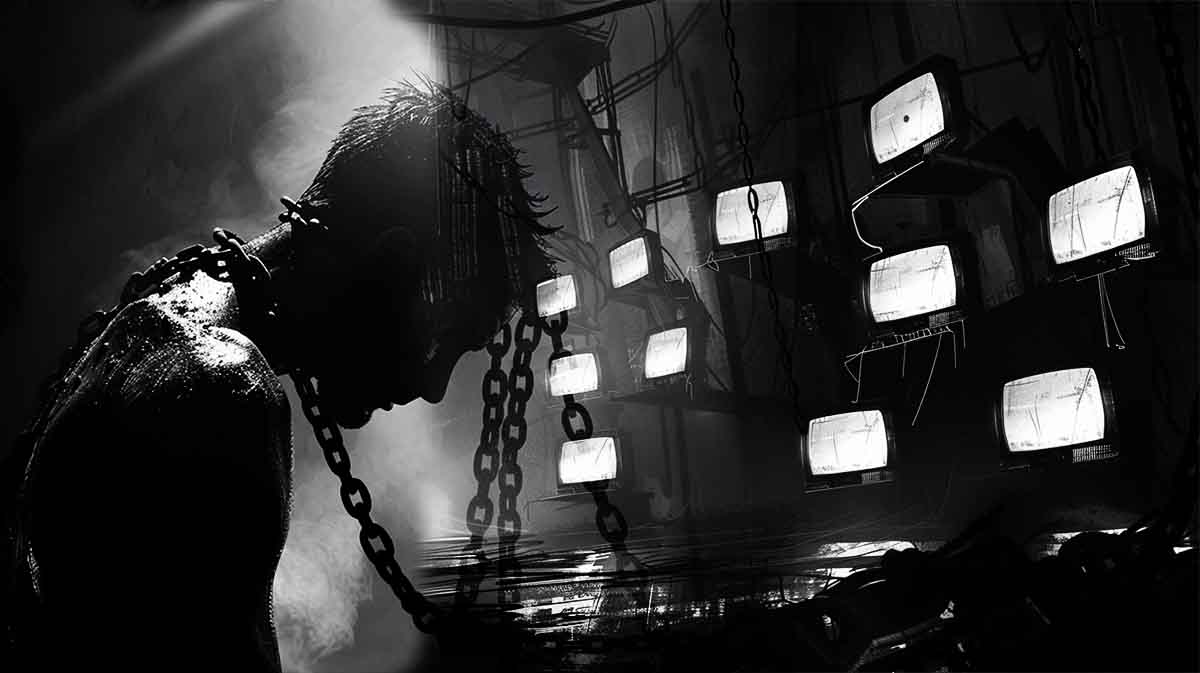
I no longer saw Jeff as the architect of the story. I began to see him as the person at the center of it, someone whose identity, reputation, and image had been taken over by forces much larger than he was.
That shift is what eventually led me to examine the case through the lens of human trafficking and exploitation.
The term may sound surprising in this context. I don’t use it casually. What interested me was the underlying question of whether a human being can be coerced, manipulated, and used for the benefit of others even when the exploitation doesn’t resemble the forms of trafficking people usually imagine.
The more I looked at Jeff’s story, the more difficult it became for me to ignore that possibility.
His supposed confession was never recorded and was never signed by him. His name and face became inseparable from acts of extraordinary violence and sexual depravity. Decades later, that identity is still commercially valuable. It sells books, documentaries, television programs, podcasts, merchandise, and streaming subscriptions.
At some point, I stopped asking only whether the criminal story was true.
I began asking who benefited from it.
The media certainly did. “Jeffrey Dahmer” became one of the most durable names in “true crime.”
The state gained something too: a spectacular prosecution, enormous public attention, and the appearance of having brought an almost unimaginable criminal to justice.
And then there was the Archdiocese of Milwaukee, which was confronting its own growing crisis over clergy sexual abuse during the same period. I began wondering what effect a far more sensational sexual horror story might have had on public attention.
I can’t prove that every institution involved had the same motive, or even that everyone understood the larger story in the same way. I don’t think a fabrication of this scale would require that.
But one fact became increasingly difficult for me to overlook: whatever the original purpose of the Dahmer story may have been, Jeff himself became extraordinarily profitable.
And the public, myself included, helped make that possible.
We watched. We read. We bought. Years later, millions of us streamed the story again.
That realization was one of the most uncomfortable parts of the investigation for me.
If the story about Jeff was fabricated, then the exploitation didn’t end in a Milwaukee courtroom. It continued every time the character created around him was sold again.
Why I Couldn't Walk Away
I didn’t continue researching this case because I developed an interest in true crime. If anything, the more I learned, the less interested I became in the alleged crimes themselves.
What held my attention was a different question: What happens when powerful institutions tell a story about a person, and almost no one thinks to check whether the story is true?
By then, I had begun to see the case in a much larger context. The state emerged from it with one of the most spectacular criminal prosecutions in American memory. The media acquired a story that could be sold and resold for decades. And the Archdiocese of Milwaukee was confronting a growing clergy sexual-abuse scandal at roughly the same time that an almost unimaginably lurid sexual-horror story came to dominate public attention.
I can’t prove that all of those interests were coordinated, or that everyone involved understood the larger picture. I don’t think they would have needed to.
What I can say is that Jeff paid the price.
His name became synonymous with cannibalism, necrophilia, murder, and sexual depravity. His face became instantly recognizable around the world. Decades later, the identity created around him is still being sold in films, books, documentaries, merchandise, and television series.
The more I came to believe that the underlying story was false, the harder that became for me to accept.
There is another reason the case stayed with me.
Many of the things I found would have been extraordinarily difficult for an ordinary person to discover in 1991. There was no Google. Public databases weren’t sitting a few keystrokes away. A reader who encountered an address in a newspaper couldn’t casually run a reverse-address search from home. Court records, government databases, old newspaper archives, and genealogical material weren’t available to the public in anything resembling the way they are now.
Even I didn’t think to check everything. The reverse-address search at 808 N. 24th Street began when an anonymous person suggested I run it.
That fact has stayed with me.
The story may have survived for so long partly because almost nobody had the tools, or the reason, to examine its smallest details. Once those tools became available, however, some of those details began to look very different.
And once I’d seen that, I couldn’t simply return to being a member of the audience.
I don’t think of what I’m doing as trying to “exonerate” Jeff Dahmer. Exoneration assumes that the accusation itself arose from a genuine criminal case.
My question has become more fundamental than that.
How did a real human being come to be replaced by one of the most infamous characters in modern American culture?
And what, if anything, can still be done to separate the man from the story told about him?
Want to See the Evidence for Yourself?
If you’ve read this far, the next step is to look at the records yourself.
Explore the original documents, public records, and contradictions that led me to question the Jeffrey Dahmer story and ultimately reject the official narrative.